
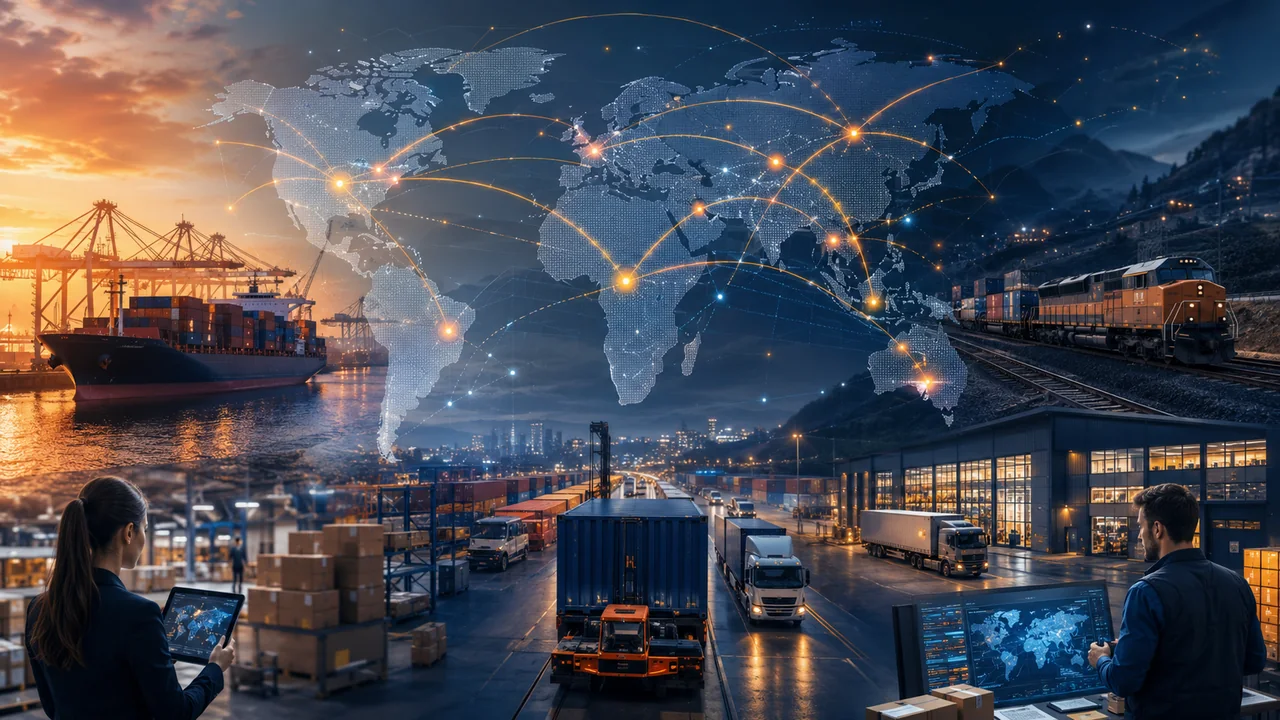
Businesses and governments are rethinking supply chains to balance efficiency with visibility, resilience, labour standards and environmental impact. Supply chains have often been optimised for unit cost and speed under stable assumptions. Pandemic disruption, conflict, climate hazards and regulatory change exposed dependencies hidden by averages. Rethinking does not mean every country produces everything locally. It means balancing efficiency with visibility, resilience, labour standards, environmental impact and the capacity to respond.
Why Global Supply Chains Are Being Rethought is best understood by separating its main components and then reconnecting them. The sections below examine supplier visibility, geographic concentration, inventory choices, labour conditions, transport emissions, and regional capacity. These are not interchangeable labels: each describes a distinct decision, dependency or source of evidence. Together they show why the subject cannot be judged from one headline benefit or one alarming example.
The discussion considers the experience of residents, public agencies, service operators and community organisations and keeps the analytical boundary wide enough to include the complete journey through public systems, including people least well served. That matters because progress in global supply-chain resilience should be visible through service outcomes, local experience, geographic coverage and distribution across groups, not inferred from attention, purchase or participation alone.
Supplier visibility in the context of Why Global Supply Chains Are Being Rethought
Supplier visibility maps critical products, components, services and locations beyond the immediate contractor where consequence justifies the effort. Bills of material, data processors and logistics providers may reveal shared dependencies. Visibility should lead to decisions, not endless questionnaires. Protect commercially sensitive information and focus on nodes whose failure would stop an important outcome.
A closer look at supplier visibility changes what counts as progress in global supply-chain resilience. Adoption or activity alone is weak evidence. Residents, public agencies, service operators and community organisations should ask whether the intended outcome improved, whether the experience remained fair and whether the approach can be maintained. The analysis has to include the complete journey through public systems, including people least well served. This is where hidden dependencies usually become visible and where a promising idea can be strengthened before it expands.
Test supplier visibility with the smallest group that still represents the important variation in global supply-chain resilience. Include a typical case, a difficult case and someone likely to need support. Gather service outcomes, local experience, geographic coverage and distribution across groups, but also ask what participants expected and what surprised them. Correct avoidable confusion before interpreting the outcome. A pilot that teaches the procedure while measuring it may otherwise mistake unfamiliarity for a permanent limitation.
Communication should distinguish established evidence, reasonable expectation and speculation. Claims about supplier visibility in global supply-chain resilience become more trustworthy when readers can see the setting, timeframe and limitation behind them. Plain language does not require pretending the issue is simple. It requires defining specialised terms, explaining the consequence of uncertainty and showing which decision can responsibly be made with the information available now.
Geographic concentration in the context of Why Global Supply Chains Are Being Rethought
Geographic concentration can create efficiency and specialist clusters while increasing exposure to one hazard, border or transport route. Measure concentration by actual source and capacity, not supplier names that rely on the same factory. Diversification may involve multiple regions, substitute designs or strategic stock. It should not simply move risk to a place with weaker safeguards.
The important shift is from recognising geographic concentration as a desirable phrase to defining how it changes a real decision about global supply-chain resilience. Residents, public agencies, service operators and community organisations may see different consequences, so the decision record should state whose experience is being used and whose may still be missing. The boundary for analysis is the complete journey through public systems, including people least well served. Keeping that boundary visible prevents an attractive improvement in one place from transferring cost, risk or effort somewhere less visible.
To act on geographic concentration, choose one real setting connected with global supply-chain resilience and document the baseline. Ask residents, public agencies, service operators and community organisations where friction, exclusion or misunderstanding currently occurs. Then test one bounded change and examine service outcomes, local experience, geographic coverage and distribution across groups. Avoid changing several elements at once, because the team will not know which produced the result. Agree in advance on a stop condition as well as a success measure; stopping a weak idea is a valid use of a pilot.
Privacy, dignity and autonomy may be affected even when they are not the primary purpose of geographic concentration. In global supply-chain resilience, ask what information is collected, which choices remain available and whether refusing the preferred route creates a penalty. Proportionate safeguards should match the consequence. People need enough explanation to participate knowingly and a realistic way to correct a mistake or challenge an important outcome.
Within global supply-chain resilience, the decisions here connect naturally with How Migration Shapes Modern Cities, which explores another part of world where evidence, implementation and long-term responsibility must be considered together.
Inventory choices in the context of Why Global Supply Chains Are Being Rethought
Inventory choices balance carrying cost and obsolescence against interruption. Critical low-cost items may justify buffers, while perishable or rapidly changing products do not. Use lead time, demand variation and recovery time to set policy. Inventory is not a complete resilience plan if replenishment remains impossible or storage conditions undermine quality.
Different participants may use the phrase inventory choices while referring to different problems. In a discussion of global supply-chain resilience, residents, public agencies, service operators and community organisations should define the term with a concrete example and relate it to access, funding, responsibility, maintenance and fair distribution. This avoids false agreement. It also makes it possible to inspect the complete journey through public systems, including people least well served and decide whether the proposed action addresses the original need or merely changes the most visible symptom.
Before expanding work on inventory choices, write a one-page implementation note for global supply-chain resilience. Include purpose, affected groups, owner, baseline, expected benefit, main risk and review date. Use service outcomes, local experience, geographic coverage and distribution across groups to test the claim. Share the findings with the people affected, including an explanation of limitations. Clear reporting allows a result to be used in another setting without pretending that different resources or conditions will produce an identical outcome.
A resilience check asks what happens when normal resources are unavailable. For inventory choices in global supply-chain resilience, consider loss of connectivity, staff absence, budget pressure, increased demand or a participant needing a different route. The response does not have to replicate ideal service perfectly, but it should protect the most important outcome. Testing recovery often reveals priorities more clearly than describing normal operation.
Labour conditions in the context of Why Global Supply Chains Are Being Rethought
Labour conditions are part of supply performance and responsibility. Excessive hours, unsafe work, forced labour or wage violations can create human harm and operational instability. Codes of conduct need credible due diligence, worker voice and remediation rather than audits designed to pass. Buyers should examine how their own prices and last-minute changes influence supplier behaviour.
Questions about labour conditions involve both design and behaviour. A technically capable approach to global supply-chain resilience may still fail if expectations, incentives or everyday routines work against it. Residents, public agencies, service operators and community organisations should examine the complete journey through public systems, including people least well served and identify the moment when people are most likely to abandon, misunderstand or work around the intended process. That moment is often a better starting point than adding another feature.
After the first trial of labour conditions, hold a short evidence review with residents, public agencies, service operators and community organisations. Compare the expected mechanism with what actually happened and use service outcomes, local experience, geographic coverage and distribution across groups to identify the difference. Separate a flaw in the idea from a flaw in setup or communication. Agree on one adjustment only, then repeat the observation. Controlled iteration produces clearer learning than a large redesign in which every variable changes at once.
Timing can change the conclusion. A short observation of labour conditions may capture novelty or setup problems rather than the durable effect on global supply-chain resilience. Choose a review period that reflects how the outcome develops and note seasonal or one-off influences. At the same time, define early warning signals that justify immediate action; waiting for a scheduled review is not responsible when evidence suggests preventable harm.
Within global supply-chain resilience, the decisions here connect naturally with Food Security in a Changing Climate, which explores another part of world where evidence, implementation and long-term responsibility must be considered together.
Transport emissions in the context of Why Global Supply Chains Are Being Rethought
Transport emissions depend on mode, distance, load, routing and speed. Air freight can be far more intensive than sea or rail for suitable goods, while emergency shipments often reflect planning failures. Measure emissions consistently and reduce unnecessary movement, packaging and expedited delivery. Local sourcing is not automatically lower-carbon if production is less efficient or inputs travel farther.
Scale changes the meaning of transport emissions. What works for a motivated first group may strain support, infrastructure or governance when global supply-chain resilience reaches a wider audience. Residents, public agencies, service operators and community organisations should model the effect on access, funding, responsibility, maintenance and fair distribution and test the complete journey through public systems, including people least well served under ordinary capacity, not only during a closely supported pilot. Expansion should be staged so evidence from one group can improve the experience of the next.
A useful workshop on transport emissions would bring together residents, public agencies, service operators and community organisations and map the experience from first contact through normal use, exception and recovery. Link each stage to global supply-chain resilience and identify what information, skill or resource is required. Choose evidence from service outcomes, local experience, geographic coverage and distribution across groups, but do not let measurement displace the outcome. A metric is worth keeping only when a change in it would lead to a specific decision.
Learning should be preserved after the immediate decision. Keep a concise record of how transport emissions was handled within global supply-chain resilience, the evidence considered and the reason for the choice. Include dissenting observations that may become important later. When staff, technology or circumstances change, this record prevents an old decision from continuing only because its original assumptions have been forgotten.
Regional capacity in the context of Why Global Supply Chains Are Being Rethought
Regional capacity can provide shorter routes, faster recovery and economic development for selected products. Building it requires skills, infrastructure, finance and dependable demand, not only a policy announcement. Governments and businesses should identify strategic capabilities carefully, coordinate standards and avoid permanent protection of inefficient supply without clear public benefit.
The consequences of regional capacity may appear before, during and long after the main decision about global supply-chain resilience. That timing matters to residents, public agencies, service operators and community organisations, because an early convenience can be followed by maintenance, support or access problems. Review the complete journey through public systems, including people least well served at each stage and identify who has authority to respond. A benefit that depends on unresolved work being absorbed elsewhere should not be described as a complete improvement.
The first step is to turn regional capacity into a question that can be answered: what should become better, for whom and by when? Apply that question to global supply-chain resilience, then gather service outcomes, local experience, geographic coverage and distribution across groups. Numbers show scale, while conversations and observation explain the mechanism behind the pattern. Compare the result with a credible alternative, including the option of improving the current process. A new approach should earn expansion through evidence rather than novelty.
Cost should be understood broadly. The price of regional capacity within global supply-chain resilience may include time, training, coordination, infrastructure and the burden of handling exceptions. A choice that looks inexpensive to one team may move unpaid work to customers, families or another public service. Record those transfers explicitly and compare them with the benefit before describing the approach as efficient.
Within global supply-chain resilience, the decisions here connect naturally with Why Media Freedom Matters to Everyone, which explores another part of world where evidence, implementation and long-term responsibility must be considered together.
Six questions to ask about global supply-chain resilience
Before making a decision about global supply-chain resilience, work through these six prompts. Each one corresponds to a section above and should be answered with a concrete example rather than a slogan.
- What does supplier visibility mean in this setting, and who experiences its effects first?
- Which current problem involving geographic concentration is the article trying to solve?
- What evidence would show that inventory choices improved rather than merely changed?
- Who owns the long-term work associated with labour conditions, including exceptions?
- Which group could be poorly served by the preferred approach to transport emissions?
- What result would justify revising or stopping work on regional capacity?
Conclusion: a balanced view of Why Global Supply Chains Are Being Rethought
Why Global Supply Chains Are Being Rethought becomes useful when its six dimensions—supplier visibility, geographic concentration, inventory choices, labour conditions, transport emissions, regional capacity—are understood together. The central promise is businesses and governments are rethinking supply chains to balance efficiency with visibility, resilience, labour standards and environmental impact. That promise should remain connected to evidence, affected people and the resources required after the initial decision.
The next step is not automatic adoption or rejection. Choose one situation involving global supply-chain resilience, document the current outcome and test a proportionate improvement. Review the result honestly, preserve what helped and change or stop what did not. That creates a stronger basis for access, funding, responsibility, maintenance and fair distribution than confidence, novelty or fear alone.
Comments 0