
Ek resignation, lekin sawaal hazaar
Indian politics mein resignations hote rehte hain. Kabhi cabinet reshuffle ke naam par, kabhi “personal reasons” ke saath, aur kabhi political pressure ke baad. Lekin Dharmendra Pradhan ka Union Education Minister ke post se resignation alag tha. Is baar story sirf Delhi ke power corridors mein nahi likhi gayi; iska pressure examination centres, coaching hubs, university campuses, social media feeds aur protest sites se aaya.
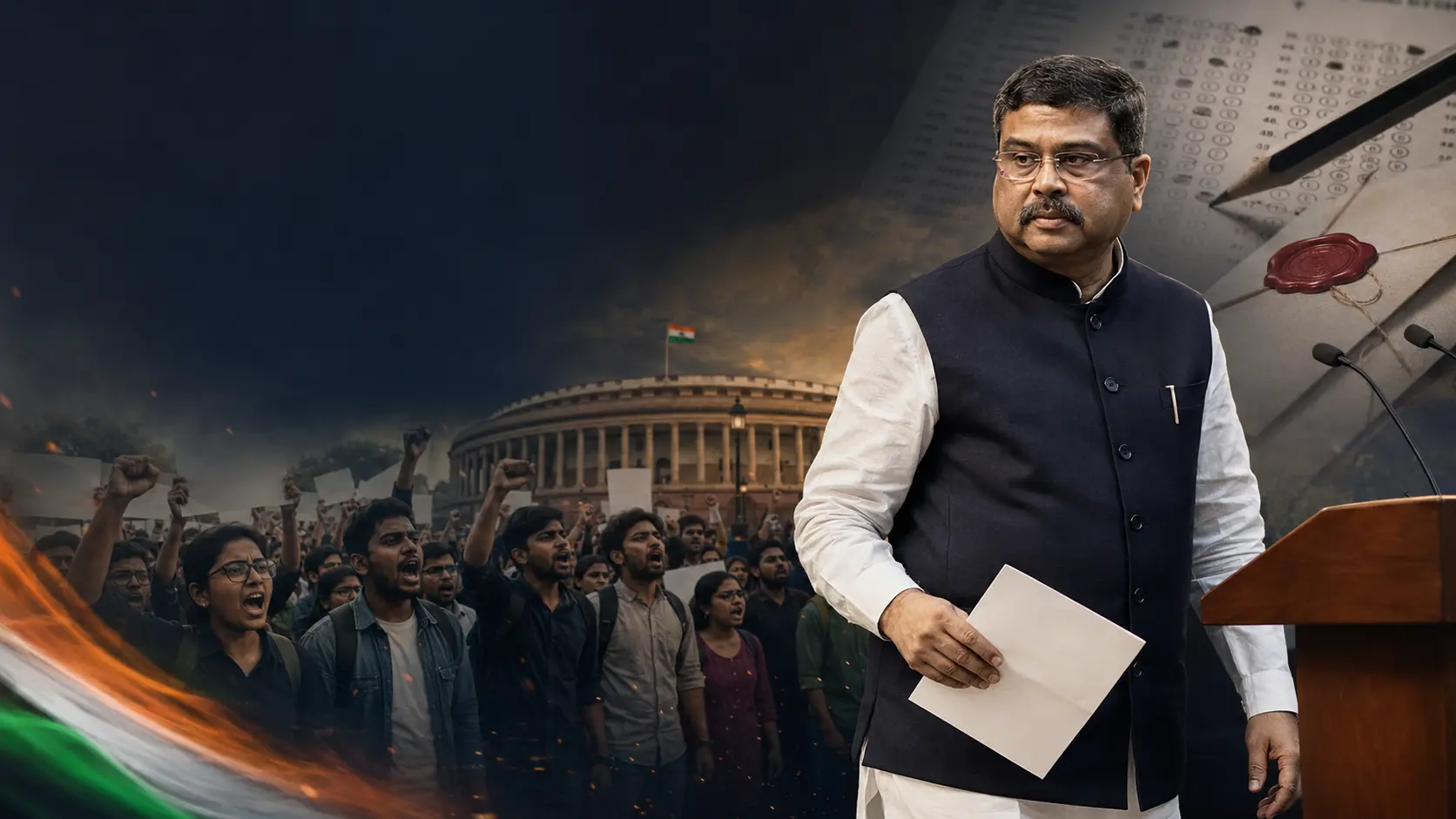
25 July 2026 ko Pradhan ne apna resignation Prime Minister Narendra Modi ko bheja. Yeh development alleged NEET paper leak, competitive examinations mein irregularities aur education system ko lekar badhte nationwide protests ke beech aaya. Youth-led “Cockroach” movement aur Cockroach Janta Party, yaani CJP, ne resignation ko apni central demand bana diya tha. Government ke saath talks, street demonstrations, police action, hunger strikes aur public pressure ke baad minister ka jaana movement ke liye ek visible political victory ban gaya.
Lekin celebration ke noise ke beech ek uncomfortable question sunai deta hai: kya minister badalne se machinery bhi badlegi?
Punchline: Kursi chali gayi, lekin kya system ki kharabi bhi jayegi?
Resignation accountability ka symbol ho sakta hai, par reform ka substitute nahi. Students ko ek face ki exit nahi, apne future ki security chahiye. Unhe aisa examination system chahiye jahan question paper exam se pehle market mein na pahunche, candidate ko months of preparation ke baad uncertainty na mile, aur investigation ka result public memory thandi padne se pehle saamne aaye.
Protest ki shuruaat sirf ek paper se nahi hui
Competitive examinations Indian middle-class dream ka major gateway hain. Medical entrance ho, engineering admission ho, university test ho ya government recruitment exam—lakhs of families apni savings, time aur emotional energy in examinations mein invest karti hain. Ek student ke form ke peeche sirf application fee nahi hoti; coaching ka kharcha, hostel ka rent, travel, books, mock tests, parents ki expectations aur saalon ki mehnat hoti hai.
Jab kisi high-stakes examination par paper leak ya irregularity ka allegation lagta hai, tab damage sirf marksheet tak limited nahi rehta. Trust toot jata hai. Honest candidate ko lagta hai ki uski preparation ka competition kisi aur student se nahi, balki organised cheating network se tha. Parents ko lagta hai ki unhone ek fair opportunity ke liye payment kiya, par system ne uncertainty deliver ki.
2026 ke NEET controversy ne isi accumulated frustration ko ignite kiya. Reports ke mutabik, alleged leak aur examination ke cancellation ne around two million candidates ko affect kiya. Protesters ka anger ek incident ke against tha, lekin unki language broader thi: paper leaks kab rukenge, accountability kiski hogi, aur students ko baar-baar “investigation chal rahi hai” kehkar kitne saal wait karaya jayega?
Punchline: Student exam dene aaya tha, system ne uska patience test kar diya.
Isi anger ne ek satirical naam wale movement ko serious political force mein convert kar diya. “Cockroach” label ka symbolism powerful tha—ek aisi generation jo pressure, mockery aur institutional neglect ke baad bhi survive karti hai. Jo movement shuru mein internet culture ka extension lag sakta tha, woh ground mobilisation, protest camps aur negotiations tak pahunch gaya.
CJP ka rise: Meme se movement tak
Cockroach Janta Party ka rise Indian youth politics mein ek interesting shift ko show karta hai. Traditional politics mein party structure, cadre, district unit aur established leadership important hote hain. Digital-age mobilisation mein narrative, relatability, short videos, humour aur shared frustration equally powerful ho sakte hain.
CJP ne serious issue ko aisi language di jo young people ko apni lagi. Usne bureaucratic terms ko emotional experience se connect kiya. “Exam irregularity” ek dry phrase hai; “hamari mehnat ka paper bazaar mein bik gaya” ek lived reality hai. Isi translation ne movement ko momentum diya.
Youth protests ka biggest advantage speed tha. Social media ne local complaints ko national pattern mein convert kiya. Ek state ka candidate doosre state ke candidate ka experience dekh sakta tha. Coaching city ka protest hometown tak pahunch sakta tha. Celebrities aur public figures ki reactions ne issue ko non-political households tak bhi push kiya.
Lekin movement ki real strength online virality se zyada offline persistence thi. Jantar Mantar par sit-in, Parliament march ki call, talks ke repeated rounds aur resignation se kam par agree na karne ki strategy ne government par sustained pressure banaya. NDTV ki reporting ke mutabik, Centre ne pehle Pradhan ko Education Ministry se kisi aur portfolio mein shift karne ka proposal diya tha, lekin CJP negotiators ne ise reject kar diya. Protest leaders ka calculation simple tha: portfolio change ko resignation ki jagah accept karne se supporters ko lag sakta tha ki demand dilute kar di gayi.
Punchline: Is baar youth ne notification nahi, accountability ka appointment letter maanga.
Yeh decision politically significant tha. Protest groups aksar negotiation table par symbolic concession accept kar lete hain, jisse movement gradually lose momentum. CJP ne resignation ko red line banakar pressure intact rakha. Jab Pradhan ne resign kiya, movement ko ek clear, measurable outcome mil gaya.
Dharmendra Pradhan ka resignation: Responsibility ya pressure?
Pradhan ka resignation letter defensive aur responsible—dono tones carry karta dikha. Reports ke according, unhone kaha ki woh students ke future ko aur damage se bachane aur situation ka misuse rokne ke liye step down kar rahe hain. Unhone responsibility se kabhi na bhaagne ki baat bhi kahi, saath hi yeh indication diya ki controversy ke kuch important aspects par unhe mislead kiya gaya ho sakta hai.
Political resignation ka meaning rarely one-dimensional hota hai. Supporters ise moral responsibility keh sakte hain. Critics ise delayed accountability bolenge. Government ise tension reduce karne aur reform agenda ko reset karne ka step present kar sakti hai. Protesters ke liye yeh proof hai ki sustained public pressure result produce kar sakta hai.
Sahi interpretation shayad in sabke beech hai. Resignation voluntary statement ke through announce hua, lekin woh vacuum mein nahi aaya. Weeks of demonstrations, national media attention, opposition pressure, public figures ki reactions aur government-protester talks ne political cost increase ki. Jab kisi minister ki continuation issue solve karne ke bajay issue ka daily reminder ban jaye, tab resignation governance ke saath-saath political damage control bhi hota hai.
Punchline: Politics mein resignation kabhi sirf ek letter nahi hota; woh pressure ka public receipt hota hai.
Is resignation ko personally Pradhan ke entire political career ka end samajhna bhi premature hoga. Indian Express ki political analysis ne point kiya ki Delhi mein setback ke bawajood Odisha BJP politics mein unki relevance kam nahi hui. Woh Sambalpur se Lok Sabha MP hain aur party organisation mein experienced leader maane jaate hain. Parliament mein NDA colleagues ke warm reception ki reports bhi yeh signal deti hain ki ministerial exit automatically political isolation nahi hota.
Matlab clear hai: ministry gayi hai, political career zaroori nahi.
Government kyun jhuki?
Narendra Modi government generally pressure ke under quick ministerial resignation dene ke liye known nahi rahi hai. Isi wajah se Pradhan ka exit aur important ho jata hai. Government ne initial phase mein reforms aur tougher laws ka assurance diya, lekin protesters ke liye promises kaafi nahi the. Unhe ek visible act of accountability chahiye tha.
Government ke liye teen risks build ho rahe the.
Pehla risk youth anger ka national expansion tha. Exam controversy ek single community ya region tak limited nahi thi. Medical aspirants, university students, job seekers, young professionals aur parents sab is conversation ka part ban sakte the.
Doosra risk moral optics ka tha. Jab students apne future ke liye protest kar rahe hon aur visuals mein police action, barricades ya tear gas dominate kare, tab government ka policy message background mein chala jata hai. Public debate “reform kya hoga?” se “students ko suna kyun nahi ja raha?” mein shift ho sakta hai.
Teesra risk Parliament aur opposition pressure tha. Monsoon Session ke beech controversy ka continue rehna daily disruption aur headlines ka source ban sakta tha. Resignation ne at least immediate confrontation ko de-escalate kiya aur government ko reform package announce karne ke liye political space diya.
Reuters ke mutabik, resignation ke baad Prime Minister ne examination system reform ke liye Nandan Nilekani-led task force set up ki, aur government ne examination laws ko strengthen karne ke liye Parliament mein bill introduce kiya. Proposed changes mein leaks aur fraud se jude offences ke liye stronger penalties ki direction report ki gayi.
Punchline: Sarkar ne protest khatam karaya hai; ab use problem khatam karke dikhani hogi.
Kya yeh students ki jeet hai?
Short answer: haan. Complete answer: haan, lekin yeh first milestone hai, finish line nahi.
Democracy mein public pressure ka purpose sirf outrage express karna nahi, decision influence karna hota hai. CJP-led agitation ne ek specific demand rakhi, government ko negotiation par laya aur ministerial resignation achieve kiya. Is sense mein movement successful hai.
Yeh victory psychological level par bhi important hai. Young citizens ko aksar kaha jata hai ki online posts se kuch nahi badalta, protests temporary hote hain aur political system unki nahi sunta. Is episode ne opposite message diya: disciplined, persistent aur measurable demand ke saath mobilisation political response produce kar sakti hai.
Lekin victory ke saath responsibility bhi aati hai. Movement ko apni credibility maintain karni hogi. Protest khatam karne ka decision peace aur good faith ka sign ho sakta hai, par reform implementation par public monitoring continue rehni chahiye. Agar movement sirf resignation ke celebration tak ruk gaya, toh system symbolic accountability dekar structural change delay kar sakta hai.
Punchline: Jeet tab complete hogi jab agla student admit card ke saath doubt nahi, confidence lekar exam centre jayega.
Resignation se kya nahi badlega?
Minister ka resignation automatically National Testing Agency ki operational weaknesses fix nahi karta. Question paper ki creation, encryption, printing, transportation, storage, centre allocation, invigilation, digital systems, vendor contracts aur result processing ek large chain ka part hain. Is chain mein ek bhi weak link entire examination compromise kar sakta hai.
Systemic reform ke liye kam se kam six areas par serious work zaroori hai.
1. End-to-end exam security
Question paper ko set karne se lekar candidate ke screen ya desk tak pahunchane ke har stage ka auditable trail hona chahiye. Sensitive access role-based ho, downloads aur print actions automatically logged hon, aur suspicious behaviour par real-time alerts generate hon.
2. Vendor accountability
Government agencies frequently technology, logistics aur examination-centre operations private vendors ko outsource karti hain. Contract award ke waqt lowest price se zyada security history, staff verification aur incident response capability evaluate honi chahiye. Vendor failure par meaningful financial aur legal consequences hon.
3. Independent investigation timelines
Paper leak case open karke indefinite investigation chalana students ko justice nahi deta. Preliminary findings, investigation milestones aur final accountability ke liye defined timelines honi chahiye. Sensitive details protect ki ja sakti hain, lekin total silence trust ko damage karta hai.
4. Candidate compensation framework
Re-exam ka matlab student ke liye extra travel, accommodation, coaching time aur lost opportunities ho sakta hai. Large-scale administrative failure prove hone par automatic fee refund, travel support ya other compensation ke rules pehle se defined hone chahiye.
5. Grievance redressal that actually works
Candidates ko generic email replies aur automated ticket numbers ke beyond accessible escalation mechanism chahiye. High-impact complaints ke liye independent ombudsman ya review panel useful ho sakta hai.
6. Mental-health support
High-stakes exams already intense stress create karte hain. Cancellation, delay ya uncertainty students ke emotional health ko aur affect kar sakti hai. Helplines, counselling partnerships aur clear communication crisis response ka standard part hona chahiye.
Punchline: Leak-proof system sirf strong lock se nahi, clear accountability chain se banta hai.
Opposition ke liye opportunity, lekin test bhi
Opposition parties ne Pradhan ke resignation ko accountability ki victory aur government ki failure ke evidence ke roop mein project kiya. Politically yeh expected hai. Lekin opposition ka real test yeh hai ki kya woh issue ko sirf slogans tak rakhegi ya Parliament mein workable reforms push karegi.
Paper leak par debate bipartisan honi chahiye, kyunki exam candidates party lines mein divide nahi hote. BJP-ruled state ka student aur opposition-ruled state ka student fair exam ki same expectation rakhta hai. Recruitment aur entrance paper leaks different states mein different governments ke under report hote rahe hain. Isliye blame game ke saath national minimum standards banana essential hai.
Opposition ko proposed law ki scrutiny karni chahiye: penalties kitni practical hain, investigation authority independent hai ya nahi, whistleblowers ko protection milega ya nahi, aur candidate compensation enforceable right banega ya discretionary relief.
Punchline: Parliament ka kaam sirf resignation count karna nahi, loopholes close karna bhi hai.
Social media ne narrative kaise badla
Is movement ki language digital thi, lekin impact institutional hua. Short videos, memes, live updates aur eyewitness clips ne information monopoly break ki. Protesters apni story khud document kar rahe the. Traditional media coverage important rahi, par narrative ka first draft often smartphones se aaya.
Social media ka dark side bhi ignore nahi kiya ja sakta. Resignation ke around fake letters aur unverified claims circulate hue. Fast-moving political moments mein misinformation genuine movement ki credibility ko damage kar sakti hai. Isi liye fact-checking, verified handles aur responsible sharing essential hai.
Youth movements ko virality aur verification ke beech balance banana hoga. Ek false claim opponents ko poore movement ko discredit karne ka chance de sakta hai.
Punchline: Hashtag crowd la sakta hai, lekin credibility hi change ko tikau banati hai.
Yahan “tikau” ka matlab lasting aur sustainable change hai—sirf ek trending moment nahi.
Pradhan ke political future par kya asar hoga?
Dharmendra Pradhan BJP ke experienced leaders mein se hain. Petroleum and Natural Gas, Steel, Skill Development aur Education jaise important portfolios handle kar chuke hain. Odisha politics mein unka organisational network aur national leadership ke saath experience unhe relevant banaye rakhta hai.
Resignation unki image par stain zaroor create karta hai, especially education governance ke context mein. Future opponents is episode ko accountability failure ke roop mein use karenge. Lekin Indian politics mein ministerial resignation permanent retirement nahi hota. Time, investigation findings, party strategy aur electoral performance political comeback determine kar sakte hain.
Unke future ke liye sabse important factor yeh hoga ki resignation ke baad investigations kya establish karti hain. Administrative lapse, institutional failure aur direct personal wrongdoing alag categories hain. Public debate ko in differences ko respect karna chahiye. Ministerial responsibility lene ka matlab automatically criminal responsibility prove hona nahi hota.
Balanced analysis ka rule simple hai: political accountability demand karo, lekin evidence ke bina personal guilt declare mat karo.
New Education Minister ke saamne first 100 days ka agenda
Jo bhi Education Ministry ka charge sambhale, uske first 100 days symbolic announcements se zyada execution-focused hone chahiye.
Sabse pehle, all major national examinations ka independent security audit publish kiya jaye. Doosra, students aur parents ke representatives ko reform consultation mein seat mile. Teesra, NTA aur related bodies ke leadership roles, vendor contracts aur incident-response protocols review hon. Chautha, re-exam aur compensation ke uniform rules banaye jayein. Paanchva, proposed examination law ke implementation rules public consultation ke liye release hon.
Government ko ek public dashboard consider karna chahiye jahan investigation status, exam calendar changes, grievance resolution time aur security audit compliance track ho. Transparency inconvenience nahi; trust-rebuilding tool hai.
Punchline: Naya minister tab successful hoga jab headline uska naam nahi, students ka bharosa ho.
Democracy ke liye iska broader message
Dharmendra Pradhan ka resignation education controversy se nikla, lekin iska democratic meaning broader hai. Yeh show karta hai ki organised public pressure, clear demands aur sustained attention government ko policy aur personnel decisions reconsider karne par force kar sakte hain.
Saath hi, yeh episode government aur citizens dono ke liye warning hai. Government ke liye warning: young citizens ko passive audience samajhna costly ho sakta hai. Citizens ke liye warning: ek victory ko permanent institutional reform samajhna equally risky hai.
Democracy protest aur governance ke beech continuous conversation hai. Protest issue ko national agenda par la sakta hai; governance ko solution build karna hota hai. Agar solution transparent, measurable aur time-bound nahi hai, toh same anger kisi naye incident ke saath wapas aa sakta hai.
Punchline: Awaaz ne darwaza khol diya; ab reform ko andar aana hoga.
Final verdict: Resignation full stop nahi, comma hai
Dharmendra Pradhan ka resignation youth-led movement ke liye major political win hai. Isne demonstrate kiya ki students aur young citizens ki collective voice ko indefinitely ignore nahi kiya ja sakta. Isne ministerial accountability ko national debate ke centre mein rakha aur government ko examination reforms accelerate karne par push kiya.
Lekin ek individual exit ko entire solution kehna students ke struggle ko underestimate karna hoga. Paper leaks ek minister se bade problem hain. Yeh security architecture, vendor governance, bureaucratic accountability, legal enforcement aur transparent communication ki combined failure ko reflect karte hain.
Ab focus three questions par hona chahiye. Kya task force ki recommendations public hongi? Kya proposed law ground par leak networks ko deter karega? Aur kya affected candidates ko timely relief milega?
In questions ke clear answers ke bina resignation sirf political temperature reduce karega. Clear answers aur measurable implementation ke saath yeh moment Indian examination system ka turning point ban sakta hai.
Students ne apna message de diya hai: unki mehnat negotiable nahi, unka future collateral damage nahi, aur fairness koi favour nahi—basic right hai.
Final Punchline: Minister ka resignation news hai; leak-free examination system hi real headline hoga.
Editorial fact-check note: Current-event facts were verified against reports available on 28 July 2026. Analysis and punchlines are editorial commentary.
Comments 0