
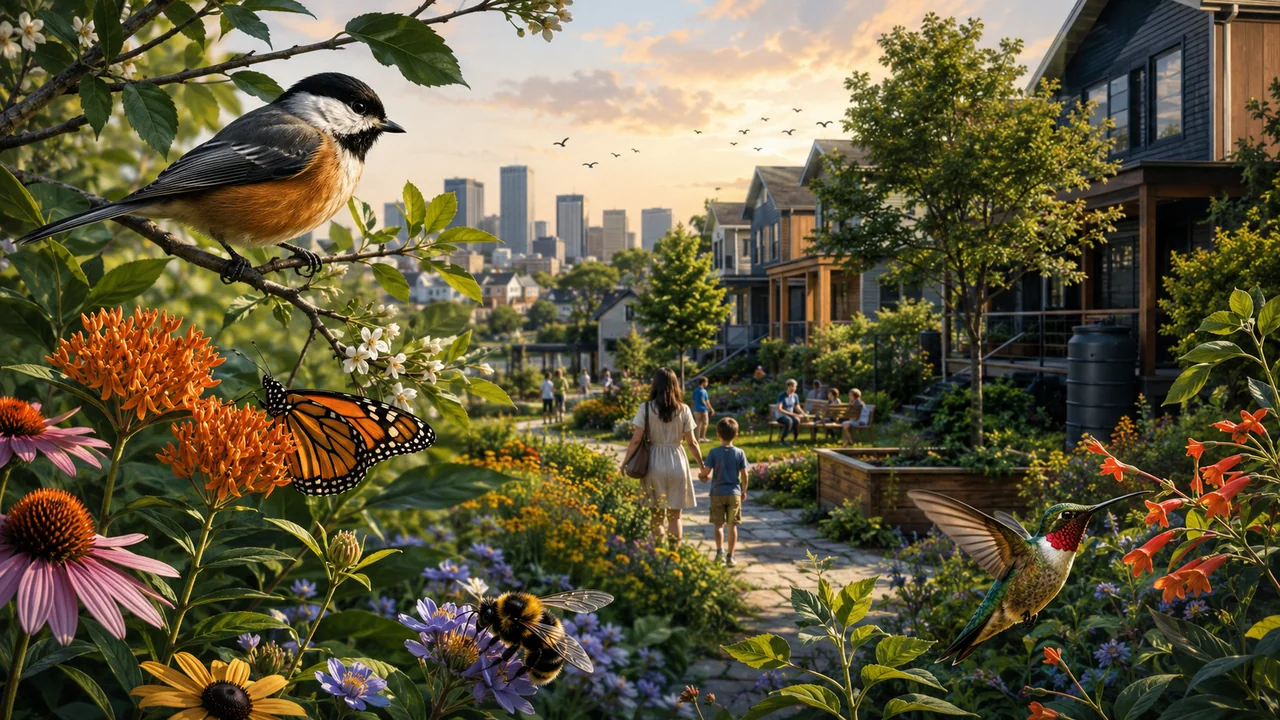
Local biodiversity supports food, water, climate resilience and human experience, making ordinary neighbourhood decisions ecologically important. Biodiversity includes variation within species, between species and across ecosystems. It can be observed in a garden, street, wetland, farm edge or vacant lot, not only in remote wilderness. Local decisions about vegetation, water, lighting, pesticides and habitat connections influence which organisms can feed, reproduce and move. Protecting biodiversity begins with understanding the particular place.
A grounded account of local biodiversity needs to answer more than whether the idea sounds promising. It must explain species and habitats, pollination, soil and water, urban nature, invasive pressures, and community observation, show how these elements interact and identify where evidence remains limited. That structure helps readers compare options without assuming that one product, policy or personal routine suits every setting.
The discussion considers the experience of researchers, engineers, policymakers and affected communities and keeps the analytical boundary wide enough to include the full system rather than the most favourable laboratory or project boundary. That matters because progress in local biodiversity should be visible through replicated measurement, comparison, uncertainty ranges and long-term observation, not inferred from attention, purchase or participation alone.
Species and habitats in the context of Why Biodiversity Matters Close to Home
Species and habitats are connected: recording a bird or insect is useful, but the food, shelter, nesting space and seasonal conditions that support it matter too. Native plants may provide relationships that ornamental species do not, although local guidance is important. Retaining mature trees, dead wood where safe, leaf litter and varied vegetation can create multiple habitat layers.
The important shift is from recognising species and habitats as a desirable phrase to defining how it changes a real decision about local biodiversity. Researchers, engineers, policymakers and affected communities may see different consequences, so the decision record should state whose experience is being used and whose may still be missing. The boundary for analysis is the full system rather than the most favourable laboratory or project boundary. Keeping that boundary visible prevents an attractive improvement in one place from transferring cost, risk or effort somewhere less visible.
After the first trial of species and habitats, hold a short evidence review with researchers, engineers, policymakers and affected communities. Compare the expected mechanism with what actually happened and use replicated measurement, comparison, uncertainty ranges and long-term observation to identify the difference. Separate a flaw in the idea from a flaw in setup or communication. Agree on one adjustment only, then repeat the observation. Controlled iteration produces clearer learning than a large redesign in which every variable changes at once.
The language used to describe species and habitats influences expectations. Marketing, policy or personal advice about local biodiversity should not turn a conditional benefit into a guaranteed outcome. State who the approach is intended for, what effort it requires and which limitations remain. Precise language helps suitable users make an informed choice and reduces disappointment that might otherwise be blamed on the people least able to influence the design.
Pollination in the context of Why Biodiversity Matters Close to Home
Pollination depends on diverse insects and other animals, flowering plants across seasons and suitable nesting conditions. Honeybees are only one part of the picture; many wild pollinators have different ranges and needs. A garden can help by avoiding unnecessary insecticides, growing regionally appropriate flowers with varied shapes and leaving some bare ground or stems where local species nest.
The practical significance of pollination lies in the choices it creates for researchers, engineers, policymakers and affected communities. Within local biodiversity, those choices affect mechanism, comparative benefit, uncertainty, scale and lifecycle impact. A narrow review may report the easiest benefit and miss the wider experience. Following the full system rather than the most favourable laboratory or project boundary gives reviewers a more honest view of who gains convenience, who assumes new responsibility and which failures require a human route rather than another instruction.
Begin with a walkthrough focused only on pollination. In relation to local biodiversity, ask one participant to describe the intended route and another to describe what happens when information, time or access is missing. Record replicated measurement, comparison, uncertainty ranges and long-term observation before proposing a fix. The contrast usually reveals assumptions hidden in the official process. Select the correction with the greatest expected benefit that can still be reversed if the result disappoints.
Responsibility should continue after launch. Decisions about pollination in local biodiversity need an owner who can answer questions, maintain the approach and respond when conditions change. Name a backup and keep essential information where the relevant people can find it. When responsibility exists only during a project meeting, predictable problems become urgent surprises and the people affected are left to discover their own workaround.
For a useful comparison with local biodiversity, read Carbon Capture: Uses, Limits and Trade-Offs. Its subject is different, but it shows how neighbouring science choices can expose dependencies that a narrow review misses.
Soil and water in the context of Why Biodiversity Matters Close to Home
Soil and water support biodiversity below the most visible layer. Fungi, bacteria, worms and other organisms contribute to decomposition and nutrient cycles. Compaction, erosion and chemical runoff can reduce this life. Covering soil with plants or mulch, managing stormwater and limiting fertiliser to genuine need can protect waterways as well as the organisms living in the ground.
Scale changes the meaning of soil and water. What works for a motivated first group may strain support, infrastructure or governance when local biodiversity reaches a wider audience. Researchers, engineers, policymakers and affected communities should model the effect on mechanism, comparative benefit, uncertainty, scale and lifecycle impact and test the full system rather than the most favourable laboratory or project boundary under ordinary capacity, not only during a closely supported pilot. Expansion should be staged so evidence from one group can improve the experience of the next.
The first step is to turn soil and water into a question that can be answered: what should become better, for whom and by when? Apply that question to local biodiversity, then gather replicated measurement, comparison, uncertainty ranges and long-term observation. Numbers show scale, while conversations and observation explain the mechanism behind the pattern. Compare the result with a credible alternative, including the option of improving the current process. A new approach should earn expansion through evidence rather than novelty.
A resilience check asks what happens when normal resources are unavailable. For soil and water in local biodiversity, consider loss of connectivity, staff absence, budget pressure, increased demand or a participant needing a different route. The response does not have to replicate ideal service perfectly, but it should protect the most important outcome. Testing recovery often reveals priorities more clearly than describing normal operation.
Urban nature in the context of Why Biodiversity Matters Close to Home
Urban nature can form a network rather than isolated decorative patches. Street trees, gardens, parks, waterways, green roofs and railway edges may provide stepping stones between larger habitats. Connectivity should be planned with road mortality, pets, artificial light and invasive species in mind. Green spaces also need equitable distribution so ecological benefits are not concentrated in wealthier neighbourhoods.
Questions about urban nature involve both design and behaviour. A technically capable approach to local biodiversity may still fail if expectations, incentives or everyday routines work against it. Researchers, engineers, policymakers and affected communities should examine the full system rather than the most favourable laboratory or project boundary and identify the moment when people are most likely to abandon, misunderstand or work around the intended process. That moment is often a better starting point than adding another feature.
A useful workshop on urban nature would bring together researchers, engineers, policymakers and affected communities and map the experience from first contact through normal use, exception and recovery. Link each stage to local biodiversity and identify what information, skill or resource is required. Choose evidence from replicated measurement, comparison, uncertainty ranges and long-term observation, but do not let measurement displace the outcome. A metric is worth keeping only when a change in it would lead to a specific decision.
Privacy, dignity and autonomy may be affected even when they are not the primary purpose of urban nature. In local biodiversity, ask what information is collected, which choices remain available and whether refusing the preferred route creates a penalty. Proportionate safeguards should match the consequence. People need enough explanation to participate knowingly and a realistic way to correct a mistake or challenge an important outcome.
Within local biodiversity, the decisions here connect naturally with Gene Editing Explained for Non-Specialists, which explores another part of science where evidence, implementation and long-term responsibility must be considered together.
Invasive pressures in the context of Why Biodiversity Matters Close to Home
Invasive pressures occur when introduced organisms spread and harm local ecosystems, economies or health. Not every non-native species is invasive. Responses should follow regional evidence and avoid well-intentioned actions that cause further damage. Gardeners can check prohibited plants, clean equipment, avoid releasing pets or aquarium contents and report priority species through official channels.
Treating invasive pressures seriously means connecting it with ownership. Someone must understand how it contributes to local biodiversity, what support is available and what would trigger a change of direction. Researchers, engineers, policymakers and affected communities should examine the full system rather than the most favourable laboratory or project boundary. The aim is not to remove every uncertainty before acting; it is to make the material uncertainties visible enough that a limited, reversible first step can be chosen.
Create a small comparison table for invasive pressures: current method, proposed method and a simpler alternative. Judge all three against the same outcome for local biodiversity, using replicated measurement, comparison, uncertainty ranges and long-term observation. Include setup and ongoing work, not only headline cost or performance. Invite a person affected by each option to challenge the assumptions. Document why the final choice was made so later reviewers can distinguish a poor decision from conditions that subsequently changed.
One common mistake is to optimise the visible part of invasive pressures while ignoring maintenance and recovery. In local biodiversity, the long-term result depends on what happens after the first decision, when attention moves elsewhere and unusual cases appear. Document the smallest routine that keeps the improvement working. If that routine requires unavailable time, authority or skill, the design should be simplified before expansion rather than relying on permanent exceptional effort.
Community observation in the context of Why Biodiversity Matters Close to Home
Community observation can reveal seasonal and geographic patterns that a small research team cannot cover. Photographs, dates and locations submitted through a suitable citizen-science programme may support monitoring when identification and privacy are handled carefully. Repeated observations from the same route are especially valuable. Participants should also receive feedback so recording builds local knowledge rather than merely extracting data.
The value of community observation becomes clearer when it is compared with a credible alternative. For local biodiversity, the comparison may be the current method, a simpler change or a different allocation of resources. Researchers, engineers, policymakers and affected communities should assess each option across the full system rather than the most favourable laboratory or project boundary. The preferred route should explain not only what it improves but also why its additional cost, complexity or constraint is justified.
Set a decision threshold for community observation before investing further in local biodiversity. The threshold might concern quality, access, cost, reliability or harm, depending on the subject. Use replicated measurement, comparison, uncertainty ranges and long-term observation and explain how long the observation must run. If the threshold is missed, decide whether the cause can reasonably be corrected. This protects the review from being rewritten after results appear simply to defend the preferred option.
Interdependence deserves attention. Changes to community observation may rely on another team, public service, supplier or household behaviour outside the formal scope of local biodiversity. List those dependencies and confirm which are merely assumed. A plan is fragile when every element must perform perfectly. Build a fallback for the dependency most likely to fail and practise the handover before pressure makes improvisation necessary.
Within local biodiversity, the decisions here connect naturally with Why Battery Recycling Is Becoming Essential, which explores another part of science where evidence, implementation and long-term responsibility must be considered together.
Six questions to ask about local biodiversity
Before making a decision about local biodiversity, work through these six prompts. Each one corresponds to a section above and should be answered with a concrete example rather than a slogan.
- What does species and habitats mean in this setting, and who experiences its effects first?
- Which current problem involving pollination is the article trying to solve?
- What evidence would show that soil and water improved rather than merely changed?
- Who owns the long-term work associated with urban nature, including exceptions?
- Which group could be poorly served by the preferred approach to invasive pressures?
- What result would justify revising or stopping work on community observation?
Conclusion: a balanced view of Why Biodiversity Matters Close to Home
Why Biodiversity Matters Close to Home becomes useful when its six dimensions—species and habitats, pollination, soil and water, urban nature, invasive pressures, community observation—are understood together. The central promise is local biodiversity supports food, water, climate resilience and human experience, making ordinary neighbourhood decisions ecologically important. That promise should remain connected to evidence, affected people and the resources required after the initial decision.
The next step is not automatic adoption or rejection. Choose one situation involving local biodiversity, document the current outcome and test a proportionate improvement. Review the result honestly, preserve what helped and change or stop what did not. That creates a stronger basis for mechanism, comparative benefit, uncertainty, scale and lifecycle impact than confidence, novelty or fear alone.
Comments 0